
Game of Thrones: Dragonfire
Warner Bros. International EnterprisesStrategy
4.61.26K Reviews
- Version
- 26.9.56416
- Installs
- 1.00M
- Age Rating
- Teen
Screenshots
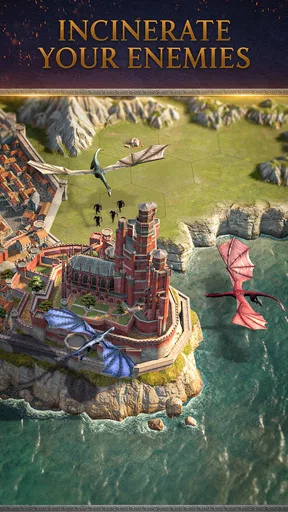
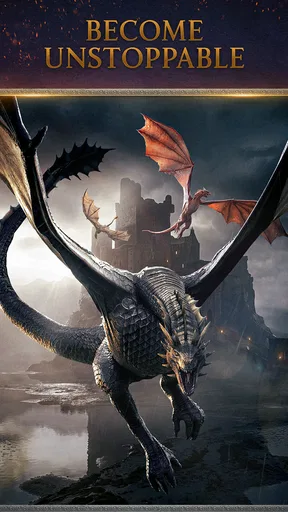
Our Review of Game of Thrones: Dragonfire
 Analysis by Appyee
Commanding dragons sounds like the headline attraction in Game of Thrones: Dragonfire, but the real appeal is how that idea changes the way I approach a strategy match. Rather than treating a dragon as a decorative bonus, I found myself planning around its presence: when to hold it back, where its power would matter most, and whether an immediate victory was worth leaving my position exposed afterward. That decision-making gives this free strategy game a more deliberate rhythm than a simple action title.
Developed by Warner Bros. International Enterprises, the game is built for fans who want to interact with the world of Westeros through command rather than passive storytelling. It carries a Teen content rating, runs on Android 7.1 and later, and currently appears as version 26.8.55519. The game has already passed one million installs, with a 4.7 average from around 36 thousand ratings, so it is clearly attracting more than only the most dedicated followers of the television universe.
I approached it as both a Game of Thrones strategy game and a test of whether a famous setting could support meaningful choices. My conclusion is favorable, with an important qualification: this is best for players who enjoy planning, gradual improvement, and making imperfect decisions under pressure. If you want a quick, self-contained game that asks little of you between matches, this may feel more demanding than expected.
Why dragon command changes the strategy
I found that dragon command works best when I treat it as a decision about the whole match, not a shortcut through the next obstacle. This section looks at how timing and restraint can make the game’s central idea feel strategic, while also explaining why players who prefer constant action may experience that same pacing differently.
The central capability is timing, not spectacle
The most important capability is the ability to command dragons as part of the fight for the Iron Throne. In practice, that means the dragon is not merely a visual reward for reaching a certain point in a match. Its presence influences how I read the battlefield and how I value an opening. A strong move is not automatically the best move if it uses the dragon at the wrong moment.
I quickly learned to separate two questions: “Can I win this exchange?” and “What will I have left after winning it?” That distinction is where the game feels most strategic. A dramatic attack can solve an immediate problem, but preserving the dragon for a more important confrontation may create a better route to the larger objective. The result is a useful layer of restraint that is easy to miss if I play every turn as aggressively as possible.
This focus also makes the game more approachable than a strategy title that buries its personality beneath menus and abstract statistics. The dragon gives new players an obvious point of interest. At the same time, experienced players can look beyond the spectacle and treat it as a resource whose value depends on context. That combination is the strongest design idea I found here.
Reading the board before giving an order
My most reliable habit was to pause before committing to a dragon move. I looked at the immediate target, the likely response, and the position I would be creating for the next exchange. That small pause matters because the best use is not always the most visible one. Sometimes the dragon is more valuable as a threat that forces caution than as a tool I spend immediately.
This is also where the game separates itself from a typical fantasy action game. In an action-focused alternative, I might judge success by reflexes and damage output. Here, I get more from considering opportunity cost. A spectacular move that leaves me without a strong answer to the next threat can be worse than a quieter move that preserves flexibility.
For anyone starting out, I recommend treating the first several sessions as practice in observation rather than as a race to dominate. Watch what changes after each command. Notice which situations make the dragon feel decisive and which ones make it feel wasteful. That approach teaches more than repeatedly choosing the largest-looking attack.
How the feature feels during ordinary play
In everyday use, the dragon command gives matches a clear focal point. I am not simply cycling through actions without a plan; I am waiting for a situation where the dragon can change the balance. That anticipation makes even a slower match feel purposeful. It also creates tension when I suspect the opponent is waiting for the same kind of opening.
The trade-off is that the game can feel less satisfying if I want constant action. The dragon’s strategic value depends on patience, and patience can look like inactivity when I am in the mood for immediate results. Players who enjoy fast arcade feedback may find the pauses between meaningful decisions frustrating rather than exciting.
I also found that a dragon-focused approach rewards players who remember what has already happened. If I use the same pattern every time, my decisions become predictable. Varying the timing, even when the underlying goal is similar, makes the command feel more like a tactical choice and less like a button I press whenever it becomes available.
A realistic evening scenario
Imagine I have a short break after dinner and want one focused session rather than an endless gaming marathon. I start a match expecting the dragon to solve my first serious problem. Instead, an early opportunity appears that looks attractive but does not improve my overall position. I hold back, accept a smaller gain, and wait for a more important confrontation.
That decision changes the rest of the match. Because I have preserved the dragon, I can threaten a stronger response later, but I also have to protect the position that made waiting worthwhile. The game becomes a sequence of connected choices instead of isolated attacks. When the final push arrives, I am not just asking whether the dragon can win; I am asking whether this is the moment that best supports the Iron Throne objective.
That is the kind of session in which the game works best for me. It fits a player who wants a compact strategic challenge with a recognizable theme, not someone looking for a passive way to fill spare minutes. Even a short play period can feel complete when I finish with a clear reason for each major decision.
Where the experience succeeds and where it asks patience
The game’s appeal comes with a real trade-off: its strongest decisions ask for attention, and free access sits alongside in-app purchase options that call for a personal spending limit. I’ll weigh those pressures against the satisfaction of learning from each match, then look at who is likely to enjoy its progression and who may be happier with a faster or more story-led alternative.
The strongest use case is deliberate decision-making
The game is at its best when I have enough attention to think one step beyond the current exchange. Dragon command creates a natural lesson in prioritization: a powerful option is only powerful if I use it where it changes the outcome. That lesson gives the game more depth than its simple premise might suggest.
It is particularly well suited to fans who already enjoy the political tension of Westeros. The Iron Throne goal gives the dragon a purpose beyond destruction. I am not merely trying to produce the biggest effect; I am trying to turn that effect into control. The setting therefore supports the strategy instead of functioning as a thin coat of familiar names.
It can also work for someone new to strategy games, provided that person is comfortable learning through mistakes. The dragon offers a clear anchor for understanding the match, while the surrounding decisions gradually reveal why timing and positioning matter. I would not describe it as effortless, but I found its central idea easier to grasp than a game that introduces many unrelated systems at once.
The main friction is the cost of commitment
The same feature that gives the game personality can create frustration. Once I commit to a dragon decision, I have to live with the consequences rather than casually undoing the moment. That is good for tension, but it can be uncomfortable when I make a poor choice because I misunderstood the situation.
There is also a longer-term concern for anyone sensitive to spending pressure. The game is free to play, but its in-app purchases range from $0.99 to $199.99 per item. I would approach that range carefully. A free entry point is useful, yet the presence of expensive purchase options means I would set a personal limit before becoming invested in progression or collection goals.
My advice is simple: enjoy the strategic loop first and treat purchases as optional rather than as part of the basic promise. If the game only feels satisfying when I am paying to accelerate progress, that is a sign to step away. The dragon-command mechanic is interesting enough to evaluate on its own, and I would not recommend spending simply to remove the patience that makes the strategy work.
How it compares with familiar alternatives
Compared with a conventional base-building strategy game, this title feels more focused around the drama of a decisive battlefield asset. A base-building alternative may suit players who prefer long-term construction, resource planning, and watching a settlement grow. I would choose that kind of game instead if my favorite part of strategy is managing an economy over a long period rather than making a few high-impact tactical calls.
Compared with a fast fantasy battler, this game gives me more reason to delay an attack. An action-oriented alternative is better when I want constant movement and immediate feedback. Here, the satisfaction comes from recognizing the right moment and understanding what the dragon’s use will cost me afterward.
It also differs from a story-first Game of Thrones experience. If I want a guided narrative with characters carrying the entire experience, this is not the most direct choice. The emphasis is on command and competition, so the world works as a strategic setting rather than as a replacement for watching the series.
Small habits that improve the experience
My first useful habit was to identify the match’s real turning point before using the dragon. Not every dangerous situation is the decisive one. By waiting for the moment that affects the broader objective, I get more value from the command and avoid confusing activity with progress.
My second habit was to keep a mental record of my own patterns. If I always save the dragon for the same type of threat, my play becomes easy to anticipate. Changing the timing forces me to evaluate the current board instead of following a memorized routine. This is a non-obvious benefit: the feature encourages self-correction because repeated habits become visible very quickly.
My third tip is to judge a session by the quality of the decisions, not only by the result. A loss can still teach me whether I committed too early, protected the wrong objective, or ignored the cost of a successful attack. That mindset makes the game less punishing and helps turn each match into practical training rather than a simple win-or-lose test.
Who should install it
I would recommend it to a player who likes the Game of Thrones setting, enjoys strategic trade-offs, and is willing to let a match develop. It is a good fit for someone who wants a recognizable fantasy theme but still expects the central ability to affect actual decisions. The dragon is not just a reason to download the game; it is the mechanic that gives the strategy its identity.
It is also a reasonable choice for players moving from casual mobile games into more thoughtful strategy. The premise is easy to understand, while the timing decisions provide room to improve. I would start without spending money, learn how the dragon changes a match, and decide afterward whether the broader experience deserves more of my time.
I would skip it if I dislike waiting for a tactical opening, dislike games that may tempt additional spending, or want a purely narrative Westeros experience. I would also choose a faster action game if my main goal is a few minutes of instant excitement. This title asks me to pay attention, and that is both its strength and its limitation.
My final recommendation
Game of Thrones: Dragonfire succeeds because commanding dragons has a real strategic consequence. The best moments are not necessarily the loudest ones; they are the moments when I hold back, read the situation, and use that power to reshape the fight for the Iron Throne. That gives the game a clear identity within mobile strategy.
Warner Bros. International Enterprises has made a free Teen-rated game that is easy to approach but not completely mindless. It runs on Android 7.1 or newer, and the current version is 26.8.55519. With a 4.7 average and more than one million installs, it has the audience to support a lively first impression, but my recommendation rests more on the quality of its central decision than on its popularity.
My honest view is that it is worth trying for patient strategy fans and Game of Thrones followers who want to command rather than simply observe. Start slowly, resist using the dragon just because it is available, and watch how each decision affects the next one. If that rhythm feels rewarding, this can become a compelling way to spend a focused session. If you need nonstop action or a story-led adventure, another option will probably serve you better.
Verdict
Strengths of Game of Thrones: Dragonfire
- Strategic battles reward careful planning and smart troop placement.
- Familiar Westeros characters add appeal for fans of the television series.
- Alliance features encourage cooperation and provide useful social benefits.
- Regular events offer extra objectives and help keep progression engaging.
- The fantasy setting gives the game a distinctive visual and thematic identity.
Limitations of Game of Thrones: Dragonfire
- Progress can become slow without frequent play or additional resource spending.
- Combat may feel repetitive once the main mechanics become familiar.
- Strong alliances can create pressure to follow strict schedules and routines.
- The large number of menus may feel overwhelming for new strategy players.
- Online features depend on an active community and a stable internet connection.
Other Releases by Warner Bros. International Enterprises
View All
Injustice: Gods Among Us
Action4.3

LEGO® Star Wars™: TFA
Adventure3.5

Injustice 2
Action4.3

Heads Up!
Word4.5
Similar Picks in This Category
View All
Clash of Clans
Supercell4.5

Plants vs. Zombies™
ELECTRONIC ARTS3.7

Lords Mobile: Kingdom Wars
IGG.COM4.5

Clash Royale
Supercell4.4

State.io — Conquer the World
CASUAL AZUR GAMES4.1

Car Driving School : Car Games
Spark Game Studios3.9
Frequently Asked Questions
What is Game of Thrones: Dragonfire?
Game of Thrones: Dragonfire is a strategy and city-building game set in the world of Westeros. You develop a stronghold, gather and manage resources, train troops, research upgrades, and recruit familiar characters from the series. Much of the gameplay focuses on expanding your territory, improving your army, and competing with other players through alliances, events, and large-scale battles.
Can I play Game of Thrones: Dragonfire without spending money?
Yes, the game can generally be downloaded and played for free, and you can progress without making a purchase. However, it includes optional in-app purchases that may speed up construction, research, troop training, or resource collection. Free players should expect longer waiting times and may need to plan carefully, complete daily activities, and participate in events to remain competitive.
Does Game of Thrones: Dragonfire require an internet connection?
Game of Thrones: Dragonfire is designed as an online strategy experience, so a stable internet connection is normally required for most features. Your progress, events, alliances, battles, and server interactions depend on connecting to the game’s servers. It is therefore not a suitable choice for fully offline play, especially when traveling or using unreliable mobile data.
Is Game of Thrones: Dragonfire suitable for beginners?
The game is accessible to beginners because its early missions introduce the main systems, including construction, resource management, troop development, and character upgrades. Nevertheless, the number of menus, timers, currencies, and strategic options can feel overwhelming at first. New players will have a smoother experience by following the tutorial, joining an active alliance, and focusing on steady account development.
What should I know about purchases and progression before downloading?
Progression combines strategic decision-making with timed upgrades, resource management, and character development. Optional purchases can provide additional resources or reduce waiting periods, which may influence the pace of advancement and competition between players. Before downloading, check the available purchase settings and consider enabling parental controls if needed, particularly because the game may encourage regular play and repeated spending.
Play our best games!


